

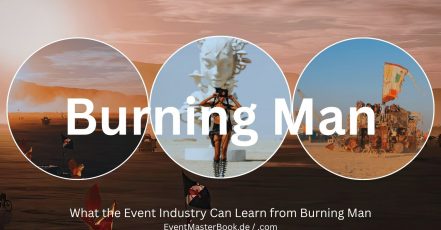
At the end of August, it is that time of the year again: the Burning Man Festival* in the Nevada desert – which explicitly defines itself as a community project rather than a classical festival (see below – Editor’s note) – captivates tens of thousands of fans from all around the world. What lies behind this legendary community event, which consistently relies on "NonVertising"? And what can marketing and event managers learn for their practical work from this radical approach?
Every year in late summer, a temporary metropolis emerges in the Black Rock Desert (Nevada, USA): Black Rock City. Around 75,000 people make a pilgrimage to the desert to become part of a collective art and cultural project that has been breaking the rules of classical event marketing for decades.
Burning the "Ego": The Symbolism of Burning Man
At the center of the community project stands "The Man" – a giant wooden figure that is ceremonially burned at the end of the shared days. The ritual symbolizes people letting go of harmful attachments: the pursuit of possessions, performance pressure, and emotional stress. The implicit message is: a person is not defined by what they own, but by the moments (experiences) of their life. Fitting this message, money (buying/selling goods), sponsorships, and brand activations are non-existent in Black Rock City.
For the events industry, which normally lives off ticket revenues and/or sponsor budgets, this is a provocative perspective. At Burning Man, commerce is not only frowned upon, but strictly prohibited.
The DNA of Black Rock City: The 10 Principles
Founded in 1986 by Larry Harvey and Jerry James as a small beach gathering in San Francisco, the festival today is based on an unshakeable set of rules – the ten principles:
- Radical Inclusion: Anyone and everyone is unconditionally welcome.
- Gifting: A culture of giving without expecting material compensation.
- Decommodification: Protection of the space from commercial exploitation, sponsorship, and advertising.
- Radical Self-Reliance: Absolute self-sufficiency and trust in one’s own resources.
- Radical Self-Expression: Creativity as an uncensored gift to the community.
- Communal Effort: Mutual support and creative collaboration.
- Civic Responsibility: Upholding local laws and social duties.
- Leaving No Trace: The grounds are left more pristine than they were found.
- Participation: There are no spectators – every person is an active co-creator (Burner).
- Immediacy: Experiencing the here and now breaks down digital barriers.
No Line-up, No Money, No Logos
In classical event marketing, headliners, sponsor logos, and monetization models are key levers. Burning Man completely flips this principle: there is neither an official music line-up nor a prescribed cultural program. The art, the stages, and the experiences are created entirely by the participants themselves.
Money is not used within the area (with the exception of the official sale of ice, and formerly coffee). Everything else – from water to a homemade meal – is traded or gifted. Sponsor logos are nowhere to be found, and brand markings on clothing or products are frowned upon.
The Reality: How Luxury and Brands Sneak In Through the Back Door
Despite the strict non-advertising approach, the Burning Man event has attracted an affluent elite for years: alongside artists and creatives, tech pioneers from Silicon Valley, investors, and celebrities travel there.
Since official brand presence is prohibited, corporations and wealthy individuals utilize loopholes. One example is so-called "turnkey camps" – luxurious camps prepared by staff. As a result, social media often paints a different picture of "Burning Man" than its original spirit:
- Influencers in elaborate haute couture designer outfits.
- Luxury camps sponsored in the background by brands or agencies.
- Staged photo shoots in front of elaborate artworks linked to companies via PR measures.
Within the Burning Man community, this "commercialization through the back door" is sharply criticized, as it contradicts the core idea of the project. For marketing and event managers, this demonstrates one thing: authenticity and likability cannot be bought.
What the Events Industry Can Learn from "Burning Man" – Commentary by the EventMasterBook Editorial Team
First things first: the project is viewed quite diversely in public discourse. For its harshest critics, Burning Man is primarily a desert event for wealthy "freaks" that impacts the environment; for its numerous fans worldwide, it remains the ultimate experience of creativity, freedom, and community.
The fact is: this much-discussed event concept provides valuable impulses for modern event and marketing practice. Very few organizers of business or public events will be able to dispense with sponsorship funds, advertising, or sales revenues following the Burning Man model. Yet the "NonVertising" approach shows what modern target groups yearn for today: genuine connection, integrity, and meaning.
Against this background, the EventMasterBook editorial team derives three key learnings:
- Experience over Advertising: Instead of appearing at major events as a classical (logo) sponsor, brands should create spaces that offer genuine added value and interactive experiences. When guests actively co-create the experience, an emotional bond is formed that no banner ad can reach.
- Community over Consumption: Event programs must move away from mere entertainment toward genuine participation. Those who strengthen the sense of "we" build long-term loyalty.
- Less is More: Reducing commercial distractions steers the focus back to the essentials: discovering creativity and new horizons, community, and experiencing self-worth and self-efficacy. It recalls what touches people at their core – not what they have "seen," "heard," or "received."
Ultimately, "Burning Man" signals to the industry: the best events have the deepest experiential value. This also applies to brand appearances at events and festivals. The best ones aim less at "being seen" and instead prepare the space for individual experiences that are so powerful that participants pass them on entirely on their own.
Information on the Event: Burning Man 2026
This year’s "Burning Man" event in Nevada, USA, takes place from August 30 to September 7, 2026. Information is available on the official website burningman.org.
*Editor’s Note: The organizers explicitly define "Burning Man" as a community project, not a festival, because for them the term festival implies a commercial approach ("Burning Man is not a festival. Burning Man is a community. A temporary city. A global cultural movement based on 10 practical principles"). The non-profit organization places great value on social behavior, safety, and environmental protection (including waste disposal). According to their own statements, those in charge work closely with local authorities.
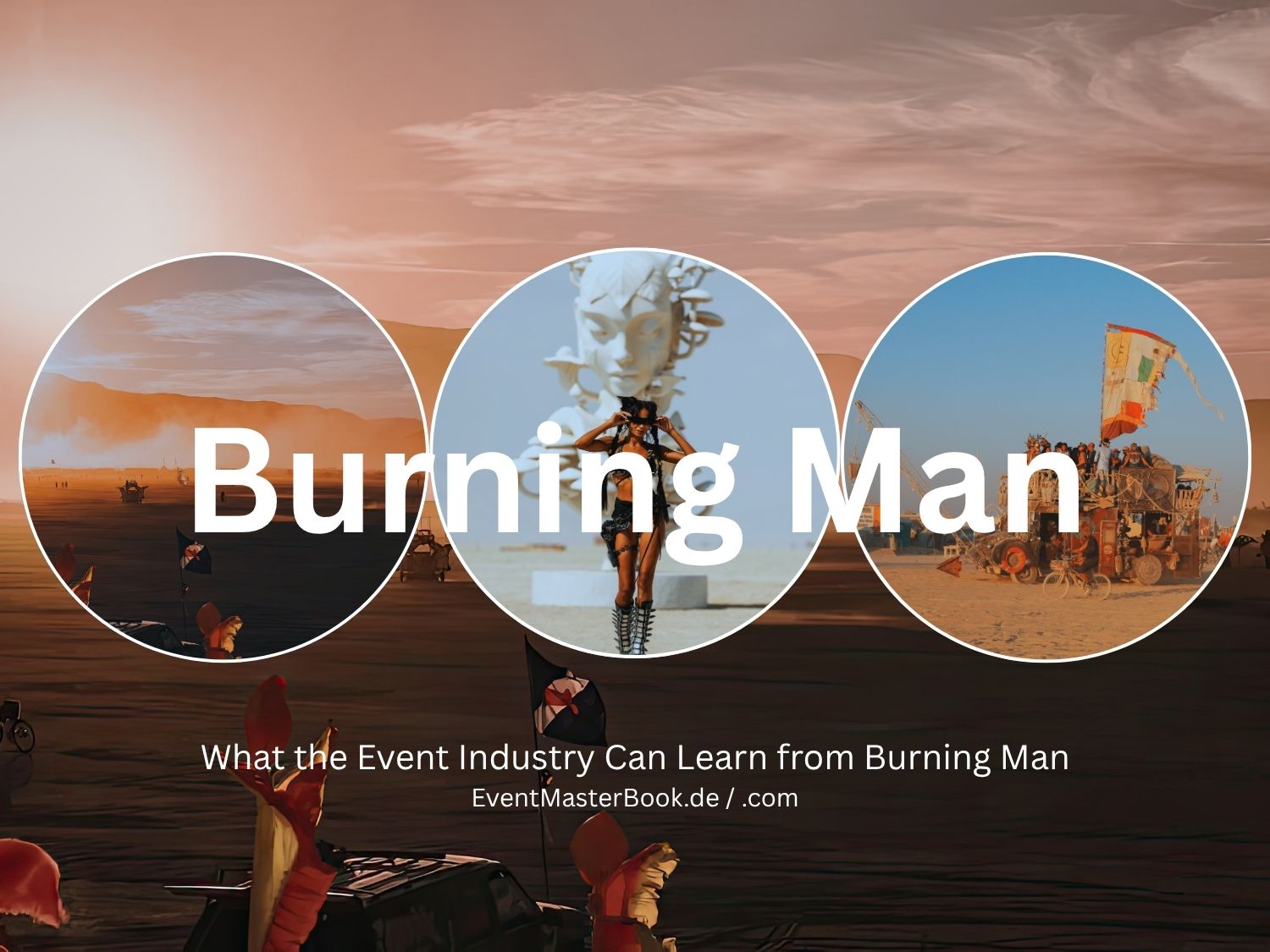
Cover image: Burning Man Mood (Creator/Collage: EventMasterBook Editorial Team; Photos: Canva Stock)
Summary (Abstract):
The article examines the US cult festival Burning Man through the lens of "NonVertising" (decommodification). It explains how the event functions entirely without sponsors, logos, or line-ups, and highlights why authenticity and participation have a stronger impact in modern event marketing than classical sponsorships and marketing activities on site.
Related Topics:
Burning Man, Event Trends, Event Management, Decommodification, Commercial-Free, Advertising-Free Event, Festival Without Sponsors, Festival Without Brands, Event Marketing, Festival Trends, Sponsorship, Non-advertising, NonVertising, Black Rock City, Events Industry, Community Building, Authenticity, Cultural Event, Creative Project, Community Project, Community Event, Learnings, EventMasterBook Event Magazine
Originally published on EventMasterBook.de | Translated and edited for EventMasterBook.com. Please excuse any translation errors. Read the original article (German): Kommerzlos zum Kult-Event – Was die Eventbranche vom Burning Man lernen kann


