

As the world’s largest event for computer and video games, gamescom draws hundreds of thousands of fans to Cologne every year. The event is long past being a pure trade fair for gaming. For marketing decision-makers, it has evolved into one of the most progressive testing grounds for future-proof brand engagement. Where traditional advertising formats fail, the gaming industry demonstrates how to engage the young, ad-resistant target audience of Gen Z and Millennials emotionally and sustainably. For event professionals, the trade show illustrates how immersive storytelling and the creator economy are transforming the event business.
The editorial team of EventMasterBook.com and marketingScout.com was live on-site, analyzing brand activations at gamescom 2026 with an eye on new marketing, trade fair, and event trends. Three fundamental trends crystallized, pointing toward the future direction of experiential marketing:
Trend 1: Immersive Brand Worlds Replace Traditional Product Displays
The era in which brands could win over audiences through mere rows of screens and banners is over. Industry giants are consistently investing in monumental set designs and multisensoric marketing.
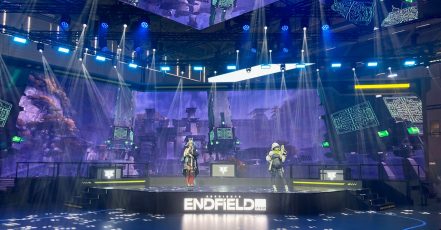
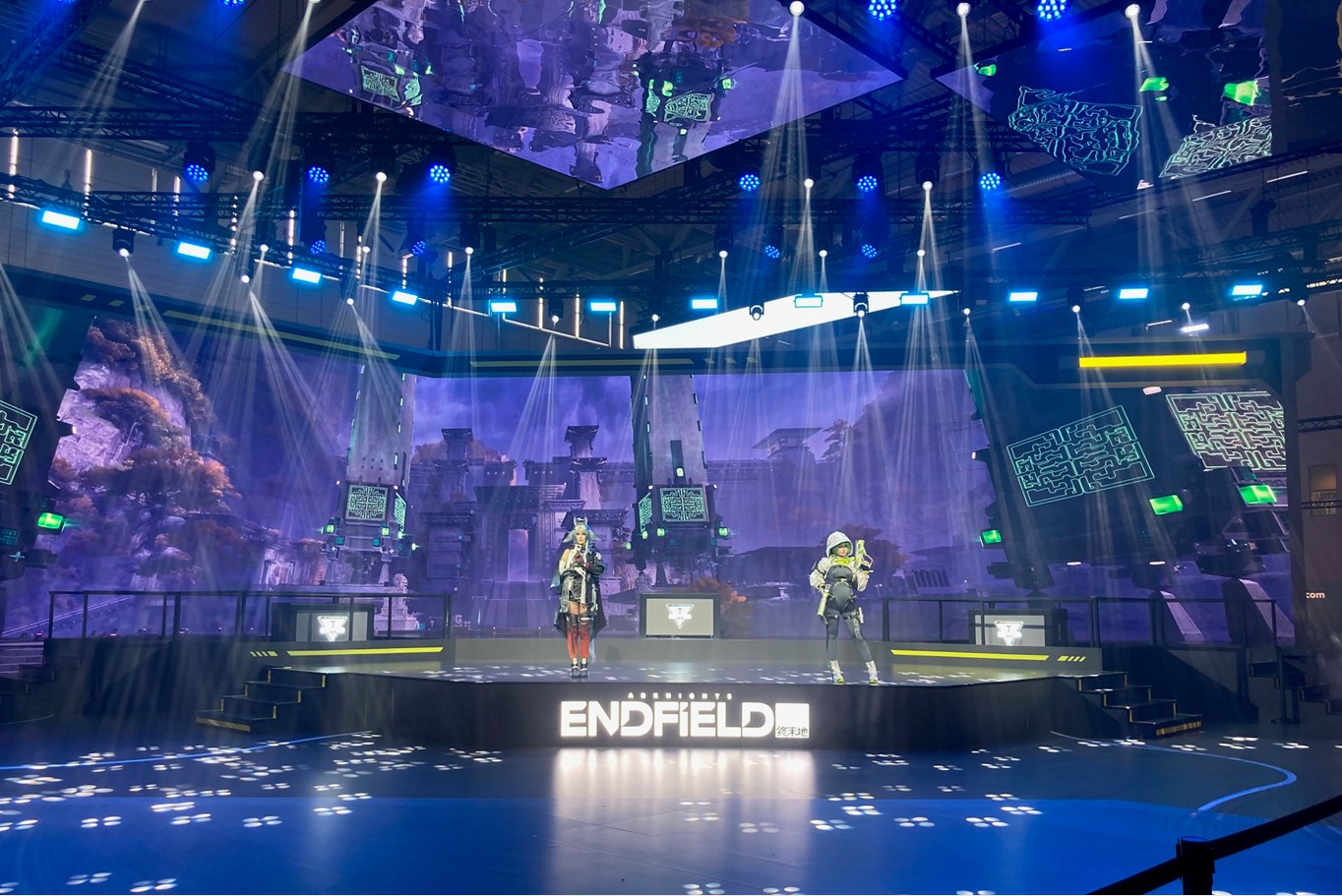
CD Projekt Red secured the jury prize for the most visually impressive booth with its spectacular staging of "The Witcher 3: Wild Hunt – Songs of the Past." Meanwhile, Gryphline scored big in the consumer voting, with the public crowning the "Arknights: Endfield" booth their absolute favorite trade show appearance.
For event marketing, these gigantic experiential worlds delivered another key insight: the time leading up to the actual product experience was given special theatrical treatment. Both CD Projekt Red and Gryphline utilized creative concepts make the waiting time in the long lines as pleasant as possible for the fans.
At the "The Witcher 3" installation, the queue was routed around the booth in such a way that visitors could follow daily livestreams featuring developer interviews and gameplay analyses on large screens. To prevent waiting fatigue, booth staff also moved through the lines early on, distributing popular Witcher medallions and pins in advance to waiting players, which sparked immediate excitement.
Gryphline handed out digital or printed mission cards to those in line. Fans could solve quick tasks via smartphone while waiting (such as social media interactions or mini-puzzles related to the game). Furthermore, the queue was strategically routed past the main stage. During the wait, visitors could watch players on stage tackle live speedruns and boss challenges, sharing in the excitement.
Conclusion: Experiential worlds beat pure product staging – and pre-event activities amplify the impact
Trend 2: Phygital Marketing – The Convergence of Gaming and Real Life
gamescom 2026 featured numerous brand activations that successfully bridged the digital (gaming) world with the physical world. Red Bull delivered a standout best-practice case.
In the outdoor area of the exhibition grounds, Red Bull – in cooperation with CD Projekt Red ("The Witcher") – launched an interactive challenge aimed at creating a phygital experience. The setup featured:
- A Magical Vending Machine: Located inside the Apollo Tent at outdoor area P8 was a specially modified beverage dispenser.
- Physical Interaction & Digital Gameplay: In front of the machine, visitors had to physically recreate magical Witcher signs (such as Aard or Igni) from the game using gesture control.
- Instant Reward: If the system correctly recognized the movements, the machine dispensed a real can of Red Bull as a reward.
From a psychological standpoint, this mechanism is brilliant: driven by the principle of "instant gratification" paired with a gesture challenge tied directly to the game, the sampling stopped being an ad interruption. Instead, visitors were met in their own world, and the brand Red Bull became part of the experience.
Trend 3: Booths as Content Factories and Backdrops for "Instagrammable Moments"
gamescom 2026 proved that a trade fair presence no longer ends at the hall walls; it must function as a global live studio. Publishers and media houses designed their booths to produce high-class content on site, reaching millions of people at home while encouraging visitors to become active multipliers themselves through user-generated content (UGC).
This transformation can be clearly seen in Webedia’s gamescom presence:
With the "GameStar FYNG City" at gamescom 2026, the media company Webedia broke traditional trade show logic, demonstrating how a media brand transitions from a pure reporter to a physical live-event producer.
Spanning a monumental 1,560 square meters in Hall 7, an urban pop-up city was built to serve as a giant content hub and backdrop for organic UGC. Instead of passive exhibition spaces, "FYNG City" invited visitors to take an active role and share their experiences digitally.
The partner booths were constructed as interactive experience spaces that delivered perfect content for TikTok, Instagram, and beyond:
- Hama / uRage ("Mod Garage"): Live actions like airbrush and real tattoos offered extreme visual value. Visitors who got tattooed on site shared these permanent trade show memories as the ultimate UGC online.
- duplo: An integrated Taiko rhythm game and influencer activations encouraged fans to film their gameplay moments and reactions.
- Vodafone: The design of a classic American diner, complete with useful services like smartphone UV-light sterilization, provided a highly "instagrammable" backdrop.
- The Ferris Wheel (with partner logos): Serving as an unmissable eye-catcher in the middle of the hall, the installation acted as a backdrop for countless selfies and panoramic community clicks.
- The Central Stage: Equipped with a 40-square-meter LED wall, hosts Ann-Kathrin Kuhls and Maurice Weber presented the daily FYNG Main Show completely "live and without a teleprompter," turning the waiting and viewing fans on site directly into part of the set.
In summary, FYNG City formed a perfectly integrated ecosystem: brand partners provided the interactive experience anchors for local UGC, while Webedia maximized digital reach through editorial credibility and global stream distribution.
Key Takeaways for Brand Managers and Experience Designers – A Conclusion by the EventMasterBook.com Editorial Team
gamescom once again provided a blueprint for tomorrow’s live marketing. It shows that successful product marketing in an increasingly digitized world thrives on participation, experiences, and genuine community value. Brands that want to stay relevant in the minds of young target audiences in the long term must learn to think like the gaming industry: moving away from pure product pushes toward interactive branded entertainment that also masters bridging the digital and analog worlds.
gamescom 2026 Overview – Key Performance Indicators (KPIs)
- 368,000 visitors from 131 countries
- Over 36,000 trade visitors, with the strongest growth coming from Brazil, Canada, the Netherlands, and the USA
- Over 624 million total views across the entire show program (measured as of Saturday evening of the event)
- 78 million views of gamescom Opening Night Live alone
- Over 302,000 views of the gamescom awesome indies show
- 6.2 million page views on gamescom epix (as of Saturday evening)
- 1,743 exhibitors from 66 countries, representing an international exhibitor share of 72 percent
- 48 country pavilions representing 41 countries
- Around 233,000 square meters of gross exhibition space
- Around 80,000 people attending the gamescom city festival in the city of Cologne
Cover image: Gigantic sets and faithful costumes: The Arknights: Endfield booth wowed visitors at gamescom 2026 as a visual fan favorite. (Photo / Copyright: EventMasterBook.de marketingScout.com, Editorial Team)
Abstract (Summary):
In this gamescom 2026 recap from a live marketing perspective, the EventMasterBook.de editorial team examines how the world’s largest gaming event transformed from a pure product exhibition into a progressive testing ground for innovative brand engagement. Utilizing practical best practices from industry heavyweights such as CD Projekt Red, Gryphline, Red Bull, and Webedia (GameStar FYNG City), the article analyzes three fundamental trends: immersive brand worlds including clever pre-event queue management, phygital marketing, and trade show booths functioning as global content factories for viral user-generated content (UGC). An indispensable insight for event professionals and marketing decision-makers.
Related Topics:
gamescom 2026, Cologne, Koelnmesse, recap, learnings for brand managers and event managers, live marketing, event marketing, experiential marketing, phygital marketing, brand engagement, immersive brand worlds, Webedia, FYNG City, content factories, trade show booth as a content ecosystem, user-generated content, UGC, event trends, Red Bull, CD Projekt Red, Gryphline, Gen Z marketing, branded entertainment, trend check, event analysis
Originally published on EventMasterBook.de | Translated and edited for EventMasterBook.com. Please excuse any translation errors. Read the original article (German): Learnings von der gamescom 2026 aus Marketing- und Eventmanagement-Sicht


